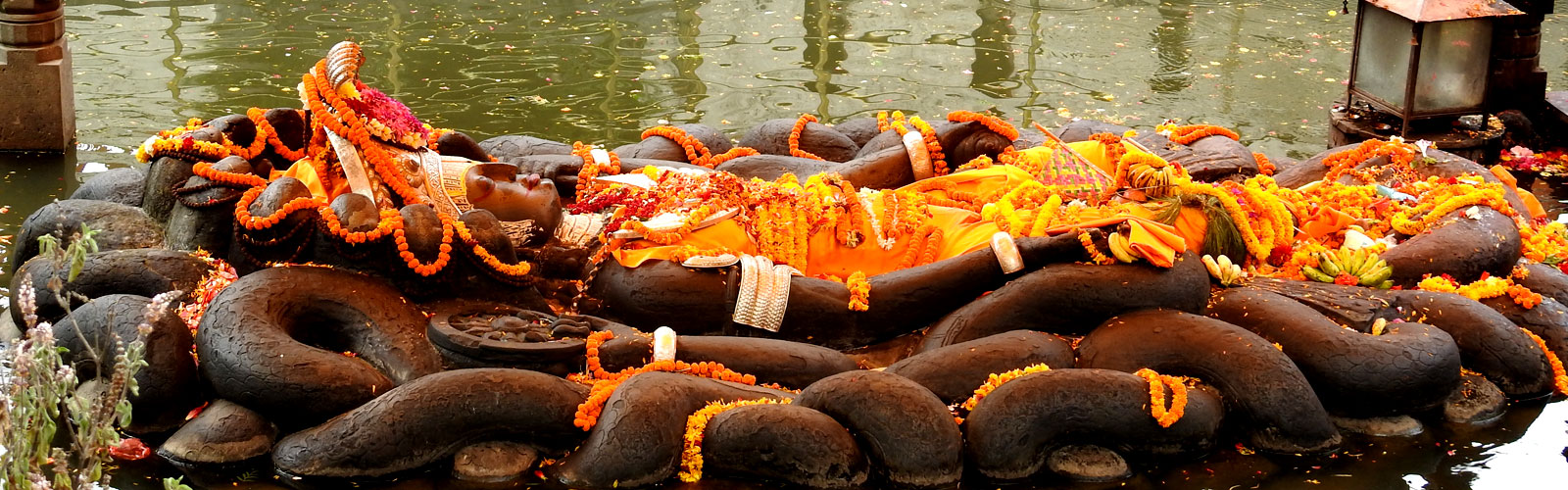
The tallest sculpture of all time, the sleeping Vishnu carrying the utmost divinity…
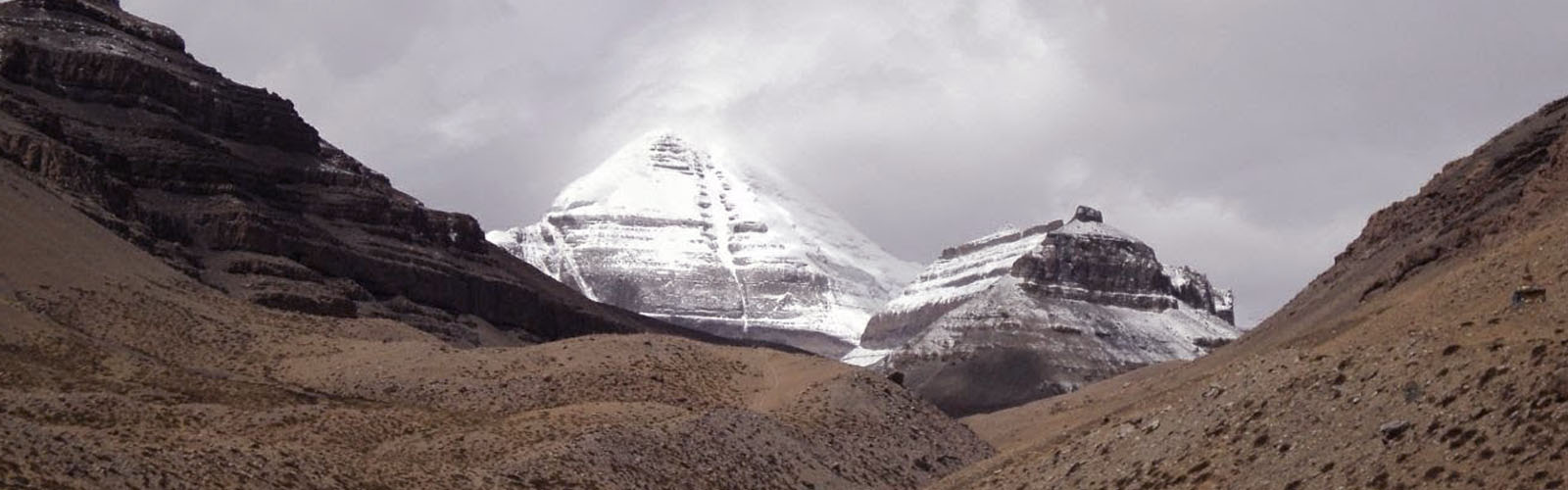
The highly devoted Yatra to reach the ultimate heavenly abode of the almighty Lord Shiva i.e. the Mount Kailash is counted amongst the most difficult terrains of all times. But, its results are undoubtedly fruitful. There is an existence of many important spiritual destinations spotted in between the Kailash Manasarovar Yatra which have to be visited by the devotees who are a participant in this Yatra. Moving forward with your journey without paying homage to these spots shall lead to an incomplete Kailash Manasarovar Yatra, thus visiting them is highly mandatory. One of the most favoured spiritual hubs during this journey is the very famous Jal Narayan Vishnu Temple that is commonly known as the Budhanilkantha Temple or sleeping Vishnu temple. It is the only Vishnu temple where Lord Vishnu is found sleeping. The statue of the Hindu Lord Vishnu that has been established in this temple is known as the very beautiful and the largest statue in the whole of Nepal and is situated at around 10 kilometres from the Kathmandu’s centre at the Shivapuri Hill’s base. Also, it is seen as a very puzzling one!
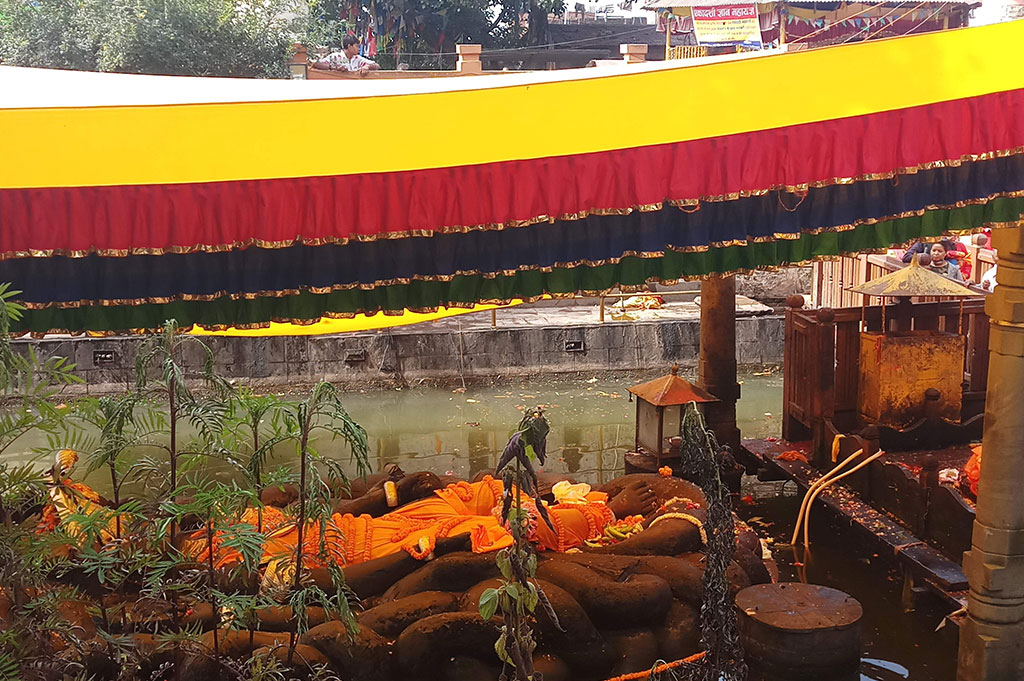
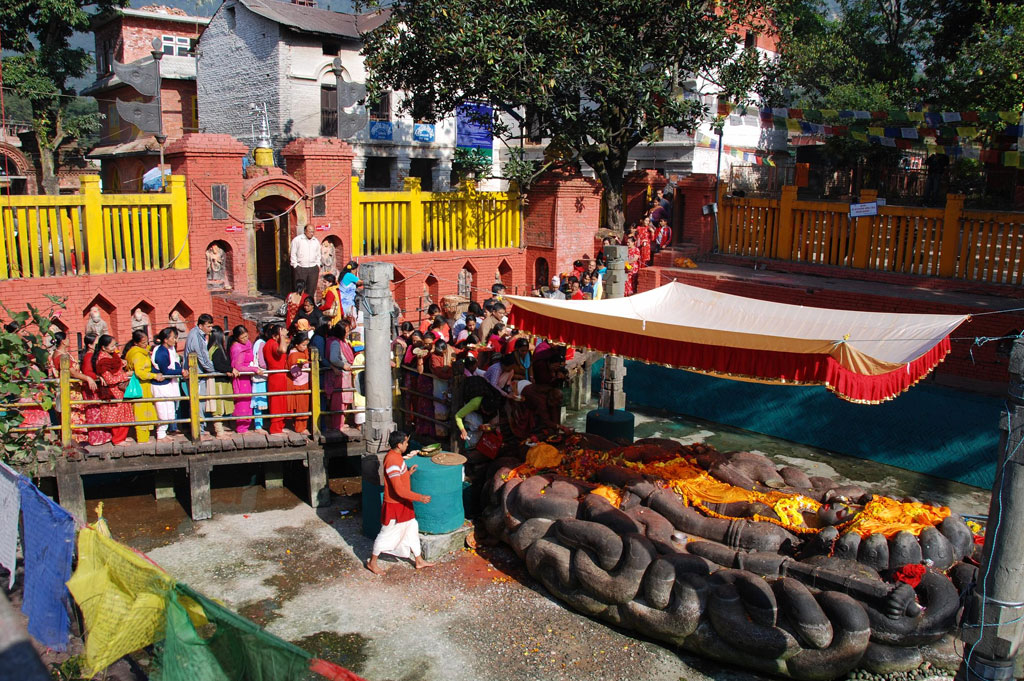
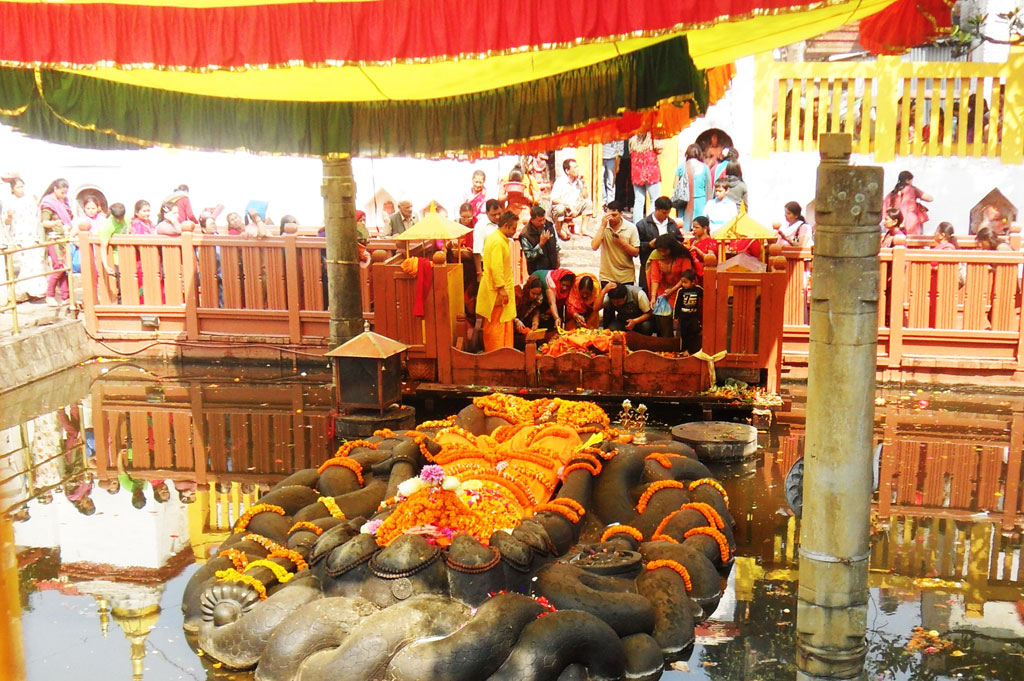
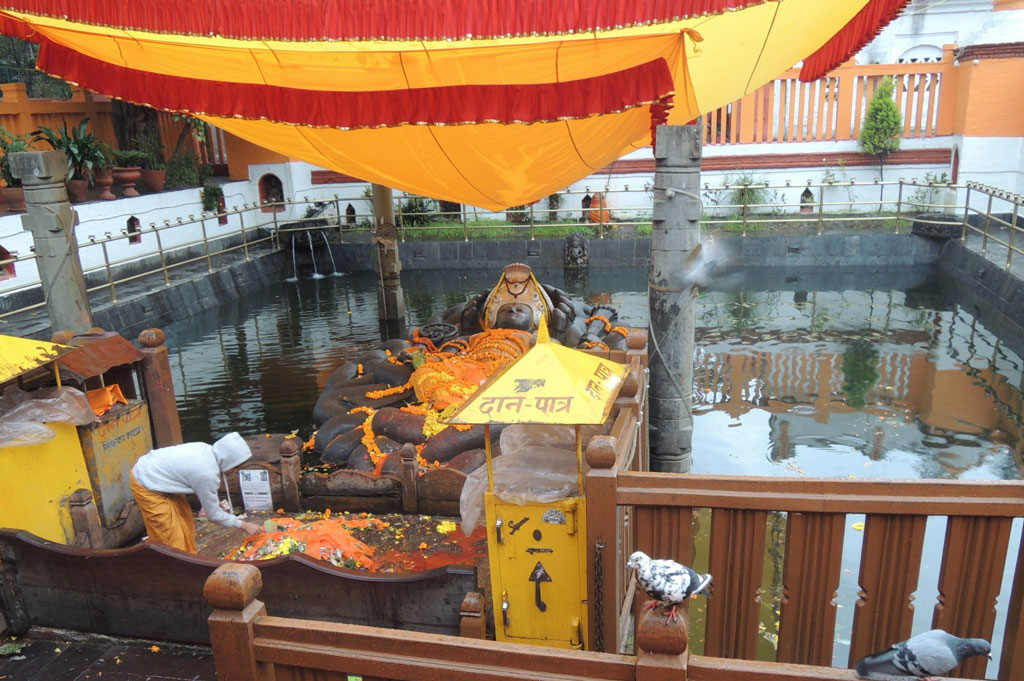
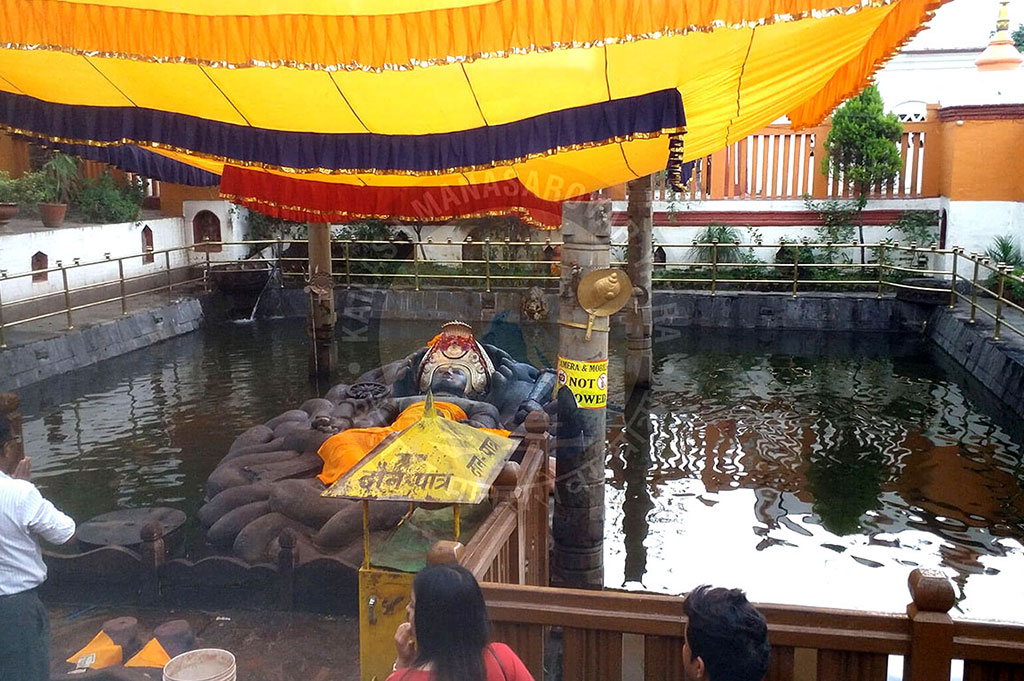
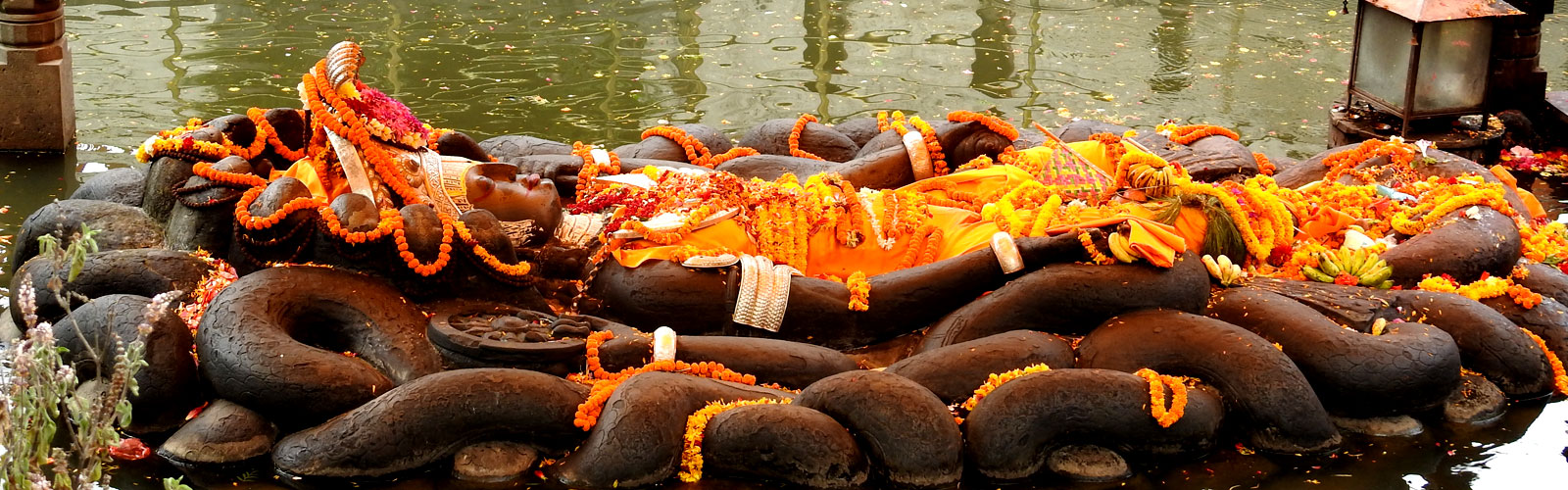
The tall sculpture of the Vishnu is having a length of approximately 5 meters and it is a ‘Sleeping Vishnu’. It has been notified that the formation of this statue has been done with the assistance of only a single block of the black basalt hailing from an unidentified origin. The statue lies on a pond filled with abundant water in a reclining position symbolizing the cosmic sea having a length of approximately 13 meters. The twisting coils which are made with Shesha Naga considered to be a cosmic serpent are continually acting as a support and a sheath to the resting statue of Lord Vishnu. In the statue, one shall witness the unique posture of Lord Vishnu. The legs of Lord Vishnu are crossed and his head is protected and sheltered by the eleven heads of the Shesha cradle. Having four hands, each of his hands is holding a special object symbolizing some of his immensely divine qualities and they are the club denoting the primeval knowledge, a lotus denoting the moving universe, a chakra/disc denoting the mind as well as a conch-shell denoting the four elements.
Budhanilkantha is derived from two words i.e. Budha meaning ‘old’ and Nilkantha meaning ‘Blue Throat’. But this name is presently known as a puzzling source and it is because the title ‘Old Blue Throat’ has been undoubtedly given to Lord Shiva, but the reason behind its usage to denote Lord Vishnu at this place still lies unresolved. The reason behind Lord Shiva being called the ‘Nilkantha’ is connected with a fascinating story.
Some call it a myth while the others consider it as a reality. According to the tale, some gods released some poison that was leading to the destruction of this world, seeing this they started begging Shiva to save the world from this poison as a result of which Lord Shiva drank all the poison as a result of which his throat started burning. He went up to the northern part of the Kathmandu range, created the Gosainkund Lake through his trident and lastly quenched his thirst. This had no side effects on him except the blue patch that was left on his throat. Thus, he was named the ‘Budhanilkantha’. It is believed by the devotees that the pond water on which the statue of Lord Shiva is kept in a sleeping position belongs to the Gosainkund Lake. Also, as notified by the Shaivas, they have noticed the formation of Lord Shiva’s reclining image underwater and that too especially during the Shiva festival that is celebrated there with huge fervour in the month of August every year. Apart from this, the locales also say that a mirror image of Lord Shiva is also created on the underside of the Lord Vishnu’s black coloured statue.
It is highly noteworthy that there is the presence of the two examples of the Sleeping Vishnu which are made up of the stone carvings in Kathmandu. But, they both differ in their visibility. One is situated approximately at a distance of 5 kilometres from the Balaju Gardens’ city centre whereas on the other hand, one may not be able to spot the other statue as it is situated in the Royal Palace.
The origin of the Budhanilkantha’s statue is traced with two tales. Some believe the first one while others believe the other one. According to some, the sculpture of Lord Vishnu was brought to Kathmandu where it is currently located at the time of the 17th century when the place was under the reign of Vishnugupta. On the other hand, some others believe that the statue was spotted by a farmer and his wife at an unidentified place and the moment they hit the sculpture, the blood started erupting from the ground. As a conclusion of this incident, it was recovered and was at last put to the right position at the right place in Kathmandu. However, irrespective of the place and time of the statue’s origin, it is undoubtedly confirmed that for majority of the time during the ancient years, this was considered as a reincarnation of Vishnu and this is because, there was the prevalence of Hinduism in Nepal and they believed in Vaishnavism worldly known as the ‘Worshipping of Vishnu’. But at the time of 13th and 14th century, Lord Shiva was the most popular and thus, the Budhanilkantha was not so ardently worshipped.